About the MicroMaze Project
Imagine your favourite location in nature. It could be a forest, a grassland, or shoreline. Regardless of where your imagination takes you, we can be sure of one thing: there will be many different species coexisting there. You will find a range of birds in the forest, many different spiders in the grassland, and a diversity of crabs within the rocky shore. Across nearly all landscapes of Planet Earth, species coexist. Why is this?
Traditionally, scientists have tried to explain species coexistence by focussing on the differences that species have. For instance, different species eat different things, or they may nest in slightly different parts of the environment. These differences prevent species from directly competing with each other for resources, and this lack of competition means that they can coexist peacefully. This way of thinking has dominated the way that scientists view species coexistence.
Species differences, however, cannot always explain coexistence patterns. Repeatedly, we find examples where many species coexist despite their overlapping food, nesting or foraging requirements. How can this be?
Micro-Environments
Here, we propose a simple, new idea for these difficult-to-explain coexistence cases. Most organisms are small and, from their perspective, their environments are dynamic “mazes” of micro-environments. These mazes of micro-environments vary in four dimensions: left, right, up, down, and through time. Crucially, species may become isolated from each other in their own corner of these mazes. As this happens, the chances of competition decrease, and the chances of coexistence across the landscape as a whole increase.
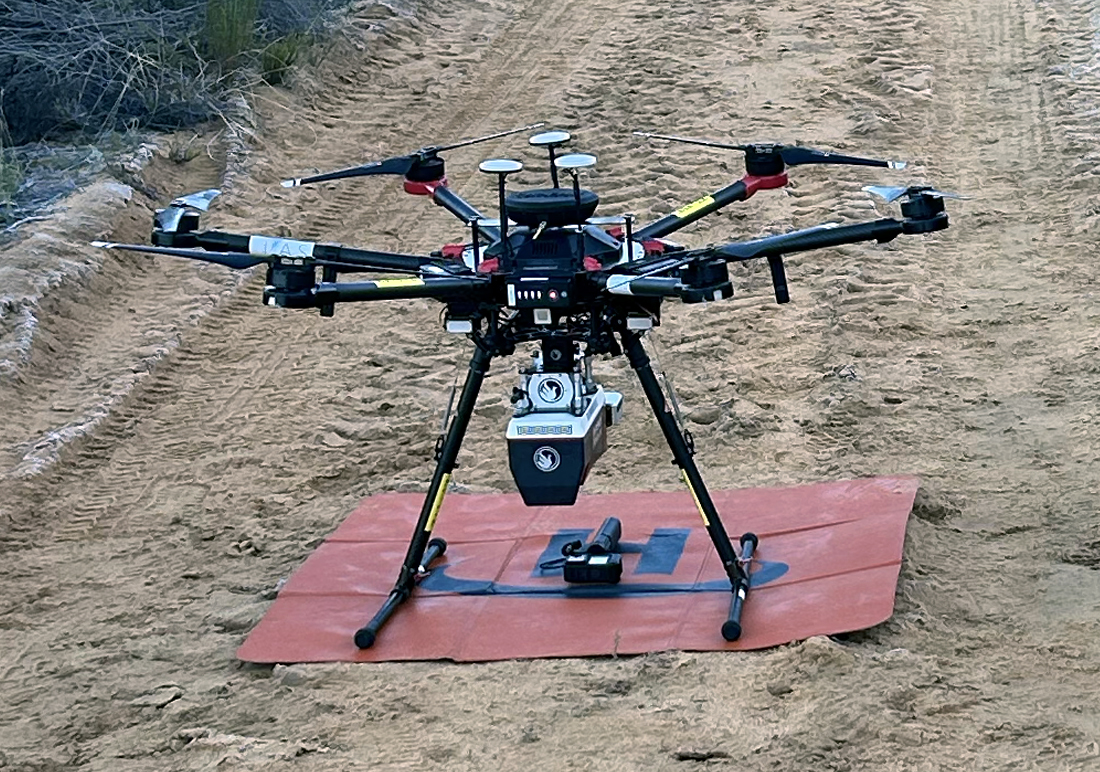
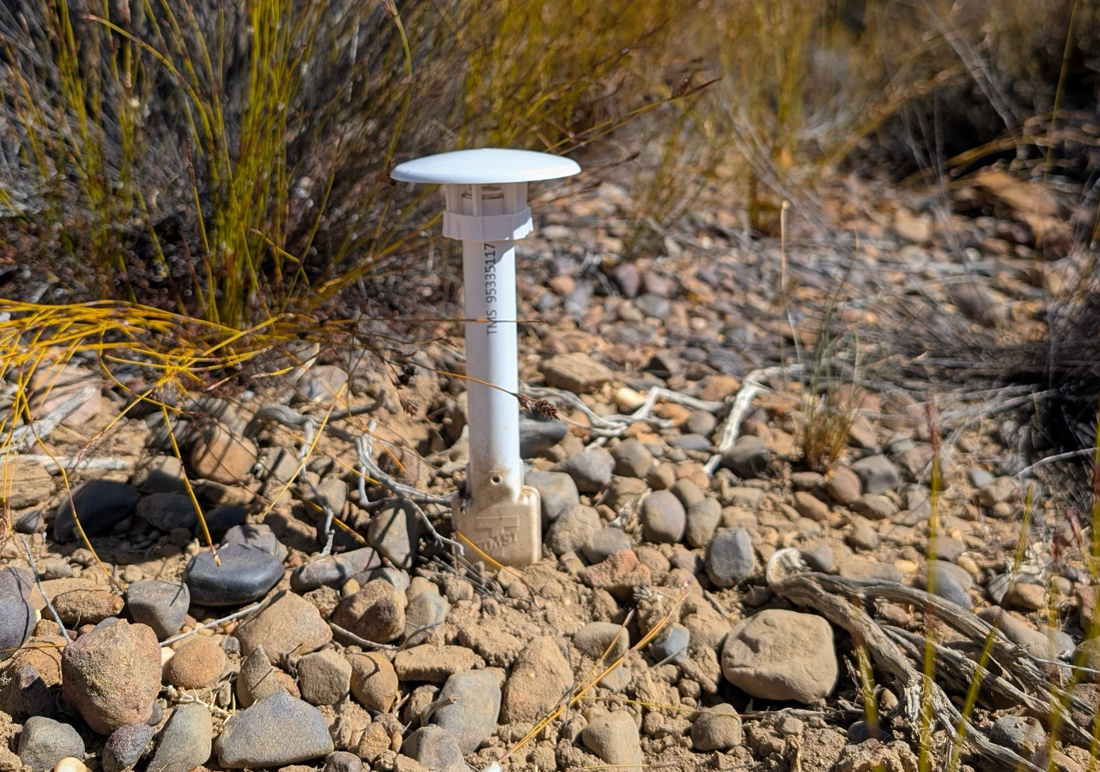
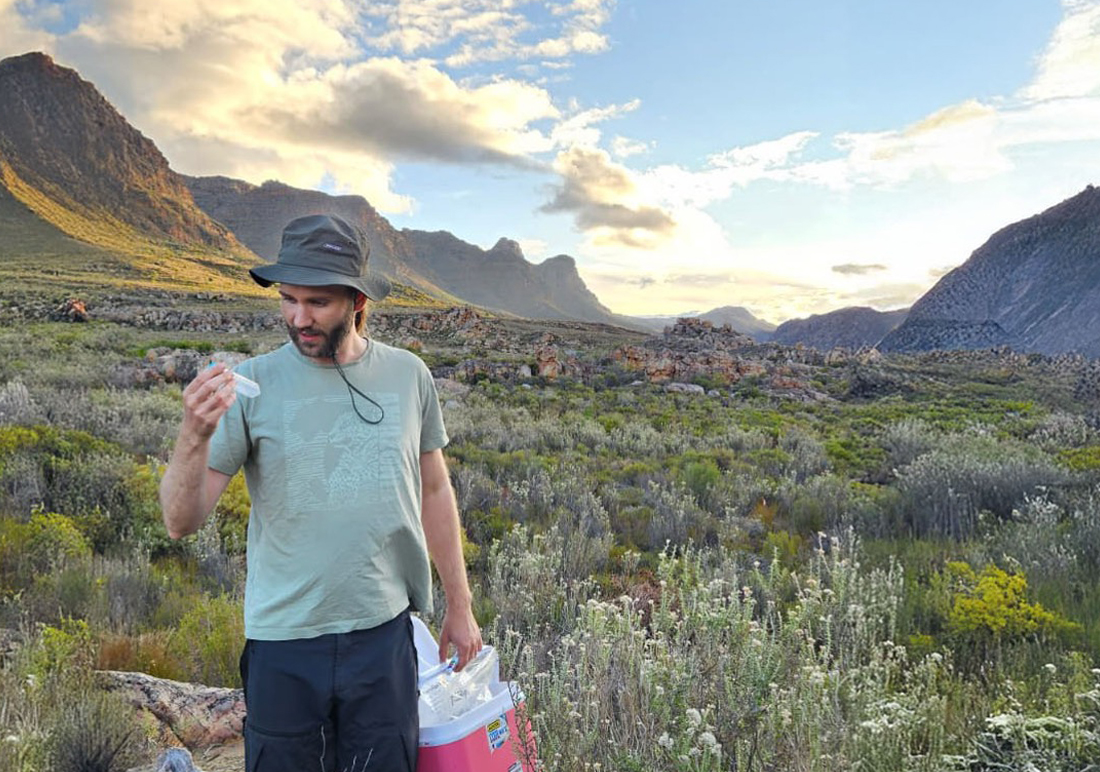
Our project seeks to test this maze hypothesis. To do so, however, we need a range of different research skills. Ultimately, we need to be able to measure micro-scale variation in the environment, and relate this to the environmental, nesting, and feeding differences that coexisting species may (or may not) have. Our team will deploy micro-sensors, drones, specialised infrared detectors, and traditional field surveys to do this. In practice, we will focus on the many coexisting ant species that live within the South African Karoo ecosystem.
Overall, we want to understand whether 4-dimensional micro-environments play a role in causing the beauty and intrigue of species coexistence across the landscapes of Planet Earth.

Watch the intro video below and stay tuned for more
This project is funded by the Human Frontier Science Programme. It is a collaborative project led by Dr Tom Bishop at Cardiff University, and involving Dr Andrew Davies at Harvard University, Dr Rebecca Senior at Durham University, and Dr Charlene Janion-Scheepers at the University of Cape Town.